
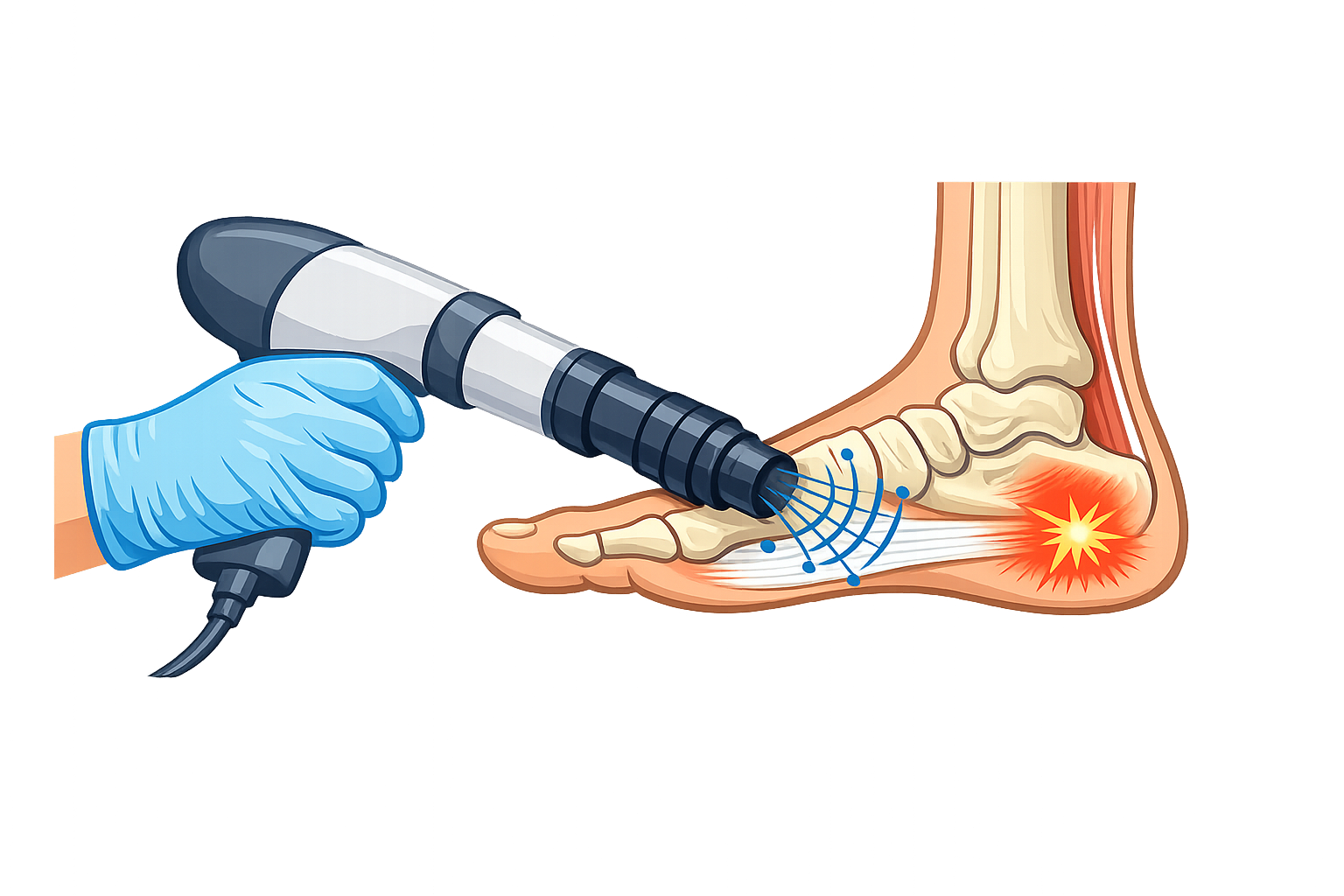
Shockwave Therapy Benefits for Feet and Ankles
A Non-Surgical Solution for Chronic Foot Pain

Chronic foot and ankle pain can affect every part of your life — from your ability to work and exercise to simply walking comfortably through your day. Whether you’re an athlete, someone who stands for long hours, or dealing with ongoing heel pain, finding lasting relief can feel overwhelming.
For many patients, shockwave therapy for foot pain offers a powerful, non-surgical solution that stimulates the body’s natural healing process — without injections, without incisions, and without long recovery times.
At Nationwide Foot & Ankle Care, P.C., we provide advanced, evidence-based non-surgical foot treatments to help patients reduce pain, restore mobility, and avoid unnecessary surgery whenever possible.
This in-depth guide explains how shockwave therapy works, who it helps, and why it has become one of the most effective modern treatments for chronic foot and ankle pain.
What Is Shockwave Therapy?
Shockwave therapy — formally known as Extracorporeal Shockwave Therapy (ESWT) — is a non-invasive treatment that uses controlled acoustic sound waves to stimulate healing in injured or chronically inflamed tissue.
Unlike electrical stimulation or ultrasound therapy, shockwave therapy delivers high-energy pulses directly to the affected area. These pulses:
- Increase blood circulation
- Stimulate cellular repair
- Trigger collagen production
- Break down scar tissue
- Activate the body’s natural healing response
The result is improved tissue regeneration and long-term pain relief.
Shockwave therapy does not involve surgery, anesthesia, or incisions. Most treatments take 15–20 minutes and are performed in the office.
How Shockwave Therapy Helps Chronic Foot and Ankle Pain

Chronic pain often develops when tissues fail to heal properly after repetitive strain, micro-tears, or inflammation. Over time, the body’s natural repair process slows down.
Shockwave therapy essentially “restarts” healing.
When acoustic waves penetrate the damaged tissue, they create controlled micro-trauma. This may sound counterintuitive — but it stimulates:
- New blood vessel formation (neovascularization)
- Improved oxygen delivery
- Growth factor release
- Accelerated tissue remodeling
This makes shockwave therapy benefits especially valuable for patients who have tried conservative treatments like rest, stretching, orthotics, and anti-inflammatory medication without success.
Conditions Treated with Shockwave Therapy
Shockwave therapy is highly effective for several chronic foot and ankle conditions.
Plantar Fasciitis
One of the most common uses is plantar fasciitis shockwave therapy.
Plantar fasciitis occurs when the thick band of tissue along the bottom of the foot becomes inflamed or degenerative. Patients often experience:
- Sharp heel pain first thing in the morning
- Pain after long periods of standing
- Tightness along the arch
- Worsening discomfort with activity
For chronic plantar fasciitis lasting more than 6 months, shockwave therapy has shown high success rates — especially when combined with stretching and supportive footwear.
Achilles Tendonitis
Chronic Achilles pain often develops in runners, athletes, or individuals with tight calf muscles. Shockwave therapy improves tendon healing by stimulating collagen production and reducing chronic inflammation.
Heel Spurs
Although heel spurs themselves are not always painful, inflammation in the surrounding tissue can cause persistent discomfort. Shockwave therapy helps address the underlying inflammation rather than just masking symptoms.
Posterior Tibial Tendon Dysfunction (PTTD)
This condition affects the inside of the ankle and can lead to progressive flatfoot deformity. Early intervention with non-surgical foot treatments like shockwave therapy may prevent worsening symptoms.
Chronic Ankle Tendinopathies
Athletes and active individuals frequently develop overuse injuries in the ankle. Shockwave therapy can accelerate recovery and reduce downtime.

Why Many Patients Prefer Shockwave Therapy Over Surgery
Surgery may be necessary in certain severe cases. However, many patients prefer to explore conservative options first.
Here’s why shockwave therapy is often recommended before surgical intervention:
1. No Incisions or Sutures
There are no cuts, stitches, or surgical wounds.
2. Minimal Downtime
Most patients return to normal activity within 24–48 hours.
3. No General Anesthesia
The procedure is performed in-office.
4. Lower Risk of Complications
No surgical infection risk.
5. Long-Term Healing, Not Temporary Relief
Shockwave therapy addresses tissue degeneration rather than simply reducing inflammation temporarily.
For many individuals seeking non-surgical foot treatments, this approach provides a balance between effectiveness and safety.
What to Expect During Treatment
Patients often ask whether the treatment is painful.
Here’s what typically happens:
- The podiatrist identifies the precise pain location.
- A handheld device delivers targeted acoustic waves.
- Treatment lasts 15–20 minutes.
- Mild discomfort may occur during the session.
- Temporary soreness may follow for 1–2 days.
Most treatment plans involve 3–5 sessions spaced one week apart.
Improvement is often gradual, with maximum results appearing over several weeks as tissue regeneration continues.
Who Is a Good Candidate?
Shockwave therapy is ideal for:
- Patients with chronic pain lasting 3–6+ months
- Individuals who have failed conservative treatment
- Athletes seeking faster recovery
- Patients wishing to avoid surgery
- Individuals who cannot tolerate steroid injections
It may not be appropriate for patients with:
- Certain circulatory disorders
- Active infections
- Pregnancy
- Severe nerve disorders
A thorough evaluation at Nationwide Foot & Ankle Care, P.C. determines candidacy.
How Effective Is Shockwave Therapy?
Clinical research shows strong success rates for chronic plantar fasciitis and tendon disorders.
Many studies report:
- 70–85% reduction in pain
- Significant functional improvement
- Long-lasting results
- Reduced need for surgery
Because it stimulates healing rather than suppressing inflammation alone, results often continue improving after treatment is completed.
Recovery and Aftercare
After treatment:
- Avoid high-impact activity for 48 hours
- Continue recommended stretching
- Wear supportive footwear
- Follow podiatrist guidance
Because healing is biological, improvement continues gradually.
Frequently Asked Questions
Is shockwave therapy covered by insurance?
Coverage varies depending on diagnosis and plan. Our office can verify benefits.
How soon will I feel relief?
Some patients notice improvement within weeks; others experience gradual improvement over 2–3 months.
Is it safe?
When performed by trained professionals, shockwave therapy is considered safe and well-tolerated.
When to See a Podiatrist for Chronic Foot Pain
If you are experiencing:
- Heel pain lasting more than a few months
- Pain interfering with exercise or work
- Recurrent ankle inflammation
- Failed conservative treatments
It may be time to consider advanced options.
At Nationwide Foot & Ankle Care, P.C., our podiatrists evaluate the root cause of your pain and develop a personalized treatment plan — which may include shockwave therapy or other evidence-based solutions.
Take the Next Step Toward Lasting Relief
Chronic foot and ankle pain does not have to define your daily life. Modern treatments like shockwave therapy for foot pain are helping patients heal faster, avoid surgery, and return to the activities they love.
If you’re exploring plantar fasciitis shockwave therapy or other non-surgical foot treatments, schedule a consultation to determine whether this advanced therapy is right for you.
Your feet carry you every day — they deserve expert care.