
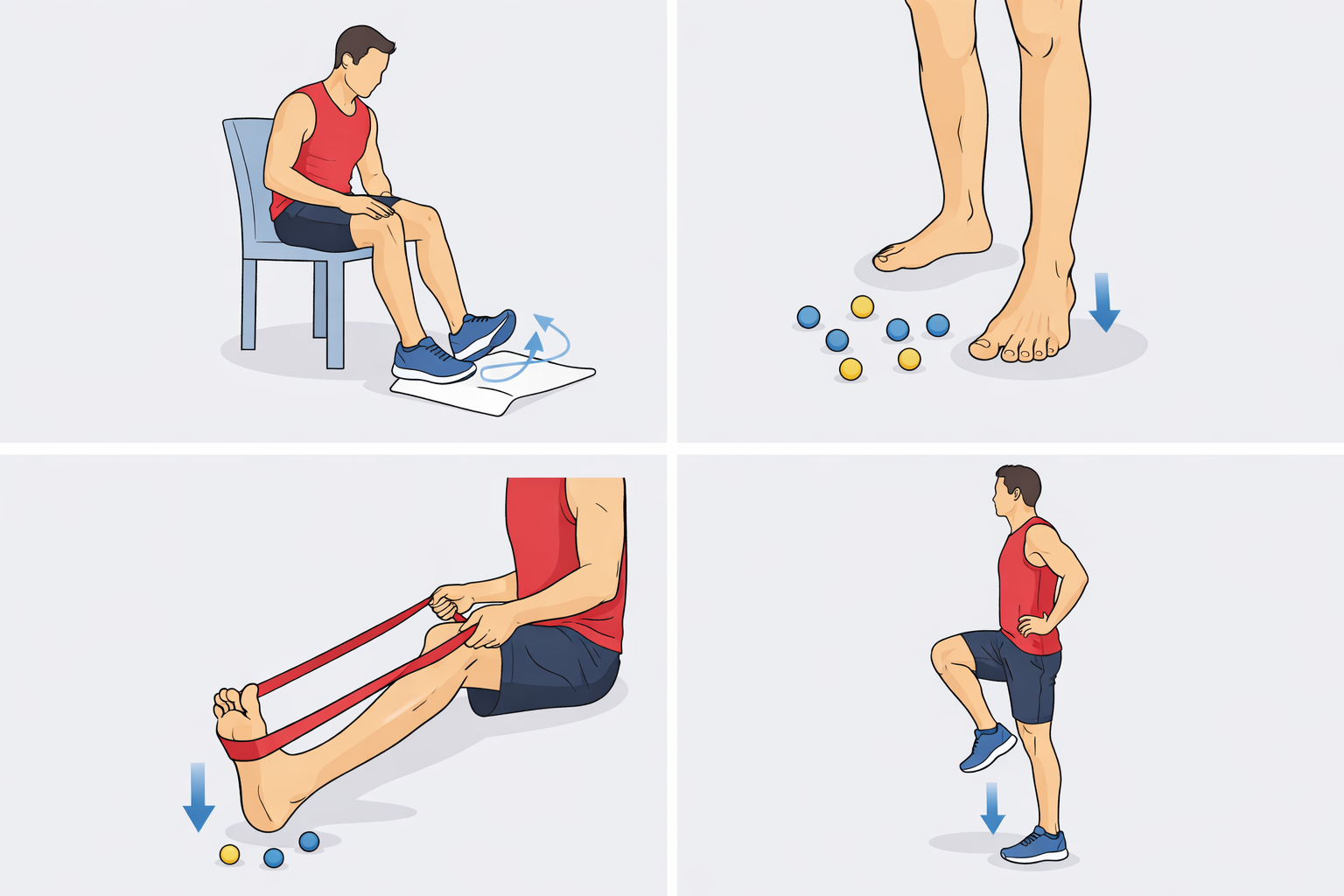
Foot and Ankle Exercises for Running

Strengthening Your Foundation for Injury-Free Running
Running is one of the most effective ways to stay active, build endurance, and improve cardiovascular health. However, the repetitive impact of running places significant stress on the feet and ankles. Without proper conditioning and care, runners can develop common injuries such as plantar fasciitis, Achilles tendonitis, stress fractures, and ankle instability.
The good news is that many of these injuries can be prevented with targeted strengthening exercises. By incorporating foot exercises for runners and ankle exercises for runners into your training routine, you can improve stability, enhance performance, and reduce your risk of injury.
This guide explores the most effective exercises to strengthen the muscles, tendons, and ligaments that support healthy running mechanics.
Why Foot and Ankle Strength Matters for Runners
SYour feet contain 26 bones, 33 joints, and more than 100 muscles, tendons, and ligaments. These structures work together to absorb impact, stabilize your stride, and propel your body forward.
When the muscles in your feet and ankles are weak, other parts of your body compensate. This can lead to:
- Poor running mechanics
- Increased stress on joints and tendons
- Reduced shock absorption
- Higher risk of injury
Strengthening these areas improves:
- Balance and coordination
- Shock absorption
- Running efficiency
- Injury prevention
For runners who log high weekly mileage, preventing running injuries should be a central part of any training program.
Common Running Injuries Linked to Weak Feet and Ankles

Before exploring the exercises, it helps to understand the conditions they can help prevent.
Plantar Fasciitis
One of the most common running injuries, plantar fasciitis occurs when the band of tissue supporting the arch becomes inflamed due to excessive strain.
Achilles Tendonitis
Overuse or tight calf muscles can place excessive stress on the Achilles tendon, leading to pain and stiffness in the back of the ankle.
Shin Splints
Weak foot stabilizers can contribute to poor alignment and excessive stress along the shin bone.
Ankle Instability
Runners who frequently roll or sprain their ankles often have weak stabilizing muscles.
Proper runners foot care includes strengthening exercises that protect these vulnerable areas.
The Best Foot Exercises for Runners
1. Toe Curls (Towel Scrunches)
This exercise strengthens the small muscles in the arch of the foot.
How to do it:
- Sit in a chair with a towel placed flat on the floor.
- Place your foot on the towel.
- Use your toes to scrunch the towel toward you.
- Repeat for 10–15 repetitions.
Benefits:
- Strengthens intrinsic foot muscles
- Improves arch support
- Helps reduce plantar fascia strain
2. Toe Spreading Exercise
Many running shoes compress the toes, which can weaken foot stability.
How to perform:
- Sit or stand barefoot.
- Spread your toes as wide as possible.
- Hold the position for 5 seconds.
- Repeat 10–15 times.
Benefits:
- Improves toe mobility
- Enhances balance
- Promotes natural foot mechanics
3. Marble Pickups
This classic exercise targets small stabilizing muscles.
Steps:
- Place marbles or small objects on the floor.
- Pick them up with your toes.
- Move them into a bowl.
Benefits:
- Improves toe strength
- Enhances coordination
- Builds arch stability

The Best Ankle Exercises for Runners
4. Heel Raises (Calf Raises)
Calf strength plays a major role in absorbing running impact.
How to perform:
- Stand with feet shoulder-width apart.
- Slowly raise your heels off the ground.
- Hold for 2 seconds.
- Lower slowly.
Perform 15 repetitions for 3 sets.
Benefits:
- Strengthens calves and Achilles tendon
- Improves push-off power
- Reduces Achilles strain
5. Ankle Alphabet
This mobility exercise improves ankle flexibility and control.
Steps:
- Sit with one leg extended.
- Use your foot to “draw” the alphabet in the air.
- Repeat with the opposite foot.
Benefits:
- Improves ankle mobility
- Enhances joint control
- Reduces stiffness
6. Resistance Band Ankle Strengthening
Resistance bands provide controlled strengthening.
How to perform:
- Sit with your leg extended.
- Wrap a resistance band around your foot.
- Pull your foot toward you, then push away against the band.
Perform 12–15 repetitions.
Benefits:
Prevents ankle sprains
Strengthens ankle stabilizers
Improves joint stability
Balance Exercises for Runners
PatiSingle-Leg Balance
Balance training helps runners maintain proper form during fatigue.
Steps:
- Stand on one foot.
- Hold the position for 30 seconds.
- Progress by closing your eyes or standing on an unstable surface.
Benefits:
Reduces injury risk
Improves neuromuscular control
Strengthens stabilizing muscles
How Often Should Runners Perform Foot Exercises?
Clinical research shows strong success rates for chronic plantar fasciitiA simple routine may include:
- Toe curls – 2 sets
- Marble pickups – 2 sets
- Heel raises – 3 sets
- Resistance band exercises – 2 sets
- Single-leg balance – 30 seconds each side
The entire routine takes 10–15 minutes and can dramatically improve long-term foot health.
Additional Tips for Preventing Running Injuries
Strength exercises are just one part of effective runners foot care.
Other important strategies include:
Wear Proper Running Shoes
Shoes should match your foot type and running style.
Replace Shoes Regularly
Most running shoes should be replaced every 300–500 miles.
Gradually Increase Mileage
Sudden increases in mileage significantly increase injury risk.
Stretch After Running
Stretching the calves and plantar fascia reduces tension in the foot.
When to See a Podiatrist
If you are experiencing:
- Heel pain lasting more than a few months
- Pain interfering with exercise or work
- Recurrent ankle inflammation
- Failed conservative treatments
It may be time to consider advanced options.
At Nationwide Foot & Ankle Care, P.C., our podiatrists evaluate the root cause of your pain and develop a personalized treatment plan — which may include shockwave therapy or other evidence-based solutions.
Keep Your Feet Strong and Running Pain-Free
Your feet are the foundation of every stride. Incorporating foot exercises for runners and ankle exercises for runners into your routine can significantly reduce injury risk and improve performance.
With proper strength training, mobility work, and consistent runners foot care, you can continue running comfortably for years to come.


