Tag: shockwave therapy

  • The Best Foot and Ankle Exercises for Runners

    The Best Foot and Ankle Exercises for Runners

    Foot and Ankle Exercises for Running

    shockwave therapy for feet and ankles

    Strengthening Your Foundation for Injury-Free Running

    Running is one of the most effective ways to stay active, build endurance, and improve cardiovascular health. However, the repetitive impact of running places significant stress on the feet and ankles. Without proper conditioning and care, runners can develop common injuries such as plantar fasciitis, Achilles tendonitis, stress fractures, and ankle instability.

    The good news is that many of these injuries can be prevented with targeted strengthening exercises. By incorporating foot exercises for runners and ankle exercises for runners into your training routine, you can improve stability, enhance performance, and reduce your risk of injury.

    This guide explores the most effective exercises to strengthen the muscles, tendons, and ligaments that support healthy running mechanics.


    SYour feet contain 26 bones, 33 joints, and more than 100 muscles, tendons, and ligaments. These structures work together to absorb impact, stabilize your stride, and propel your body forward.

    When the muscles in your feet and ankles are weak, other parts of your body compensate. This can lead to:

    • Poor running mechanics
    • Increased stress on joints and tendons
    • Reduced shock absorption
    • Higher risk of injury

    Strengthening these areas improves:

    • Balance and coordination
    • Shock absorption
    • Running efficiency
    • Injury prevention

    For runners who log high weekly mileage, preventing running injuries should be a central part of any training program.


    Before exploring the exercises, it helps to understand the conditions they can help prevent.

    Plantar Fasciitis

    One of the most common running injuries, plantar fasciitis occurs when the band of tissue supporting the arch becomes inflamed due to excessive strain.

    Achilles Tendonitis

    Overuse or tight calf muscles can place excessive stress on the Achilles tendon, leading to pain and stiffness in the back of the ankle.

    Shin Splints

    Weak foot stabilizers can contribute to poor alignment and excessive stress along the shin bone.

    Ankle Instability

    Runners who frequently roll or sprain their ankles often have weak stabilizing muscles.

    Proper runners foot care includes strengthening exercises that protect these vulnerable areas.


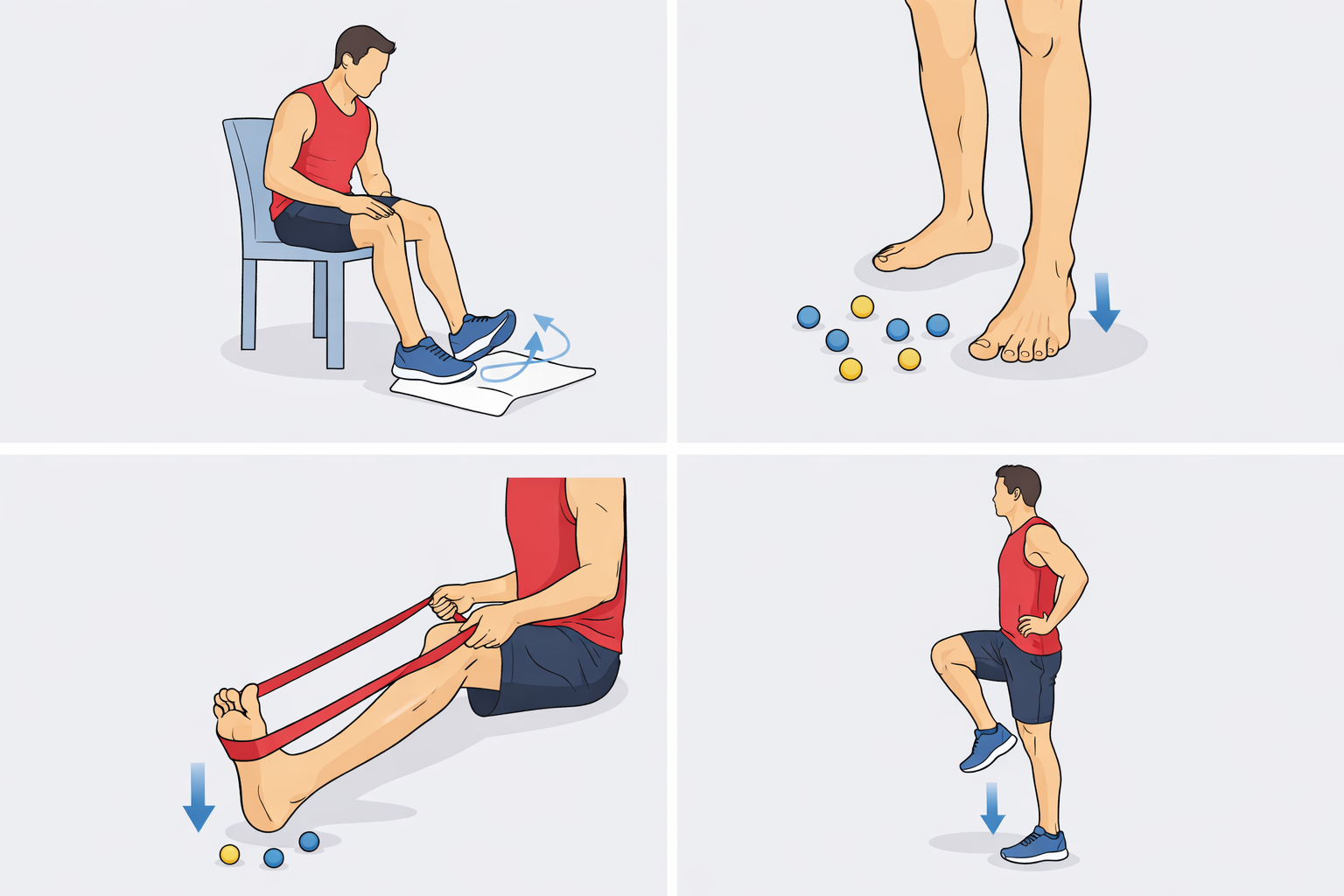
    1. Toe Curls (Towel Scrunches)

    This exercise strengthens the small muscles in the arch of the foot.

    How to do it:

    1. Sit in a chair with a towel placed flat on the floor.
    2. Place your foot on the towel.
    3. Use your toes to scrunch the towel toward you.
    4. Repeat for 10–15 repetitions.

    Benefits:

    • Strengthens intrinsic foot muscles
    • Improves arch support
    • Helps reduce plantar fascia strain

    2. Toe Spreading Exercise

    Many running shoes compress the toes, which can weaken foot stability.

    How to perform:

    1. Sit or stand barefoot.
    2. Spread your toes as wide as possible.
    3. Hold the position for 5 seconds.
    4. Repeat 10–15 times.

    Benefits:

    • Improves toe mobility
    • Enhances balance
    • Promotes natural foot mechanics

    3. Marble Pickups

    This classic exercise targets small stabilizing muscles.

    Steps:

    1. Place marbles or small objects on the floor.
    2. Pick them up with your toes.
    3. Move them into a bowl.

    Benefits:

    • Improves toe strength
    • Enhances coordination
    • Builds arch stability
    nationwide foot and ankle doctors Michigan

    The Best Ankle Exercises for Runners

    4. Heel Raises (Calf Raises)

    Calf strength plays a major role in absorbing running impact.

    How to perform:

    1. Stand with feet shoulder-width apart.
    2. Slowly raise your heels off the ground.
    3. Hold for 2 seconds.
    4. Lower slowly.

    Perform 15 repetitions for 3 sets.

    Benefits:

    • Strengthens calves and Achilles tendon
    • Improves push-off power
    • Reduces Achilles strain

    5. Ankle Alphabet

    This mobility exercise improves ankle flexibility and control.

    Steps:

    1. Sit with one leg extended.
    2. Use your foot to “draw” the alphabet in the air.
    3. Repeat with the opposite foot.

    Benefits:

    • Improves ankle mobility
    • Enhances joint control
    • Reduces stiffness

    6. Resistance Band Ankle Strengthening

    Resistance bands provide controlled strengthening.

    How to perform:

    1. Sit with your leg extended.
    2. Wrap a resistance band around your foot.
    3. Pull your foot toward you, then push away against the band.

    Perform 12–15 repetitions.

    Benefits:

    Prevents ankle sprains

    Strengthens ankle stabilizers

    Improves joint stability


    Balance Exercises for Runners

    PatiSingle-Leg Balance

    Balance training helps runners maintain proper form during fatigue.

    Steps:

    1. Stand on one foot.
    2. Hold the position for 30 seconds.
    3. Progress by closing your eyes or standing on an unstable surface.

    Benefits:

    Reduces injury risk

    Improves neuromuscular control

    Strengthens stabilizing muscles


    Clinical research shows strong success rates for chronic plantar fasciitiA simple routine may include:

    • Toe curls – 2 sets
    • Marble pickups – 2 sets
    • Heel raises – 3 sets
    • Resistance band exercises – 2 sets
    • Single-leg balance – 30 seconds each side

    The entire routine takes 10–15 minutes and can dramatically improve long-term foot health.


    Strength exercises are just one part of effective runners foot care.

    Other important strategies include:

    Wear Proper Running Shoes

    Shoes should match your foot type and running style.

    Replace Shoes Regularly

    Most running shoes should be replaced every 300–500 miles.

    Gradually Increase Mileage

    Sudden increases in mileage significantly increase injury risk.

    Stretch After Running

    Stretching the calves and plantar fascia reduces tension in the foot.


    If you are experiencing:

    • Heel pain lasting more than a few months
    • Pain interfering with exercise or work
    • Recurrent ankle inflammation
    • Failed conservative treatments

    It may be time to consider advanced options.

    At Nationwide Foot & Ankle Care, P.C., our podiatrists evaluate the root cause of your pain and develop a personalized treatment plan — which may include shockwave therapy or other evidence-based solutions.


    Your feet are the foundation of every stride. Incorporating foot exercises for runners and ankle exercises for runners into your routine can significantly reduce injury risk and improve performance.

    With proper strength training, mobility work, and consistent runners foot care, you can continue running comfortably for years to come.
  • The Benefits of Shockwave Therapy for Foot and Ankle Pain Relief

    The Benefits of Shockwave Therapy for Foot and Ankle Pain Relief

    Shockwave Therapy Benefits for Feet and Ankles

    A Non-Surgical Solution for Chronic Foot Pain

    shockwave therapy for feet and ankles

    Chronic foot and ankle pain can affect every part of your life — from your ability to work and exercise to simply walking comfortably through your day. Whether you’re an athlete, someone who stands for long hours, or dealing with ongoing heel pain, finding lasting relief can feel overwhelming.

    For many patients, shockwave therapy for foot pain offers a powerful, non-surgical solution that stimulates the body’s natural healing process — without injections, without incisions, and without long recovery times.

    At Nationwide Foot & Ankle Care, P.C., we provide advanced, evidence-based non-surgical foot treatments to help patients reduce pain, restore mobility, and avoid unnecessary surgery whenever possible.

    This in-depth guide explains how shockwave therapy works, who it helps, and why it has become one of the most effective modern treatments for chronic foot and ankle pain.


    What Is Shockwave Therapy?

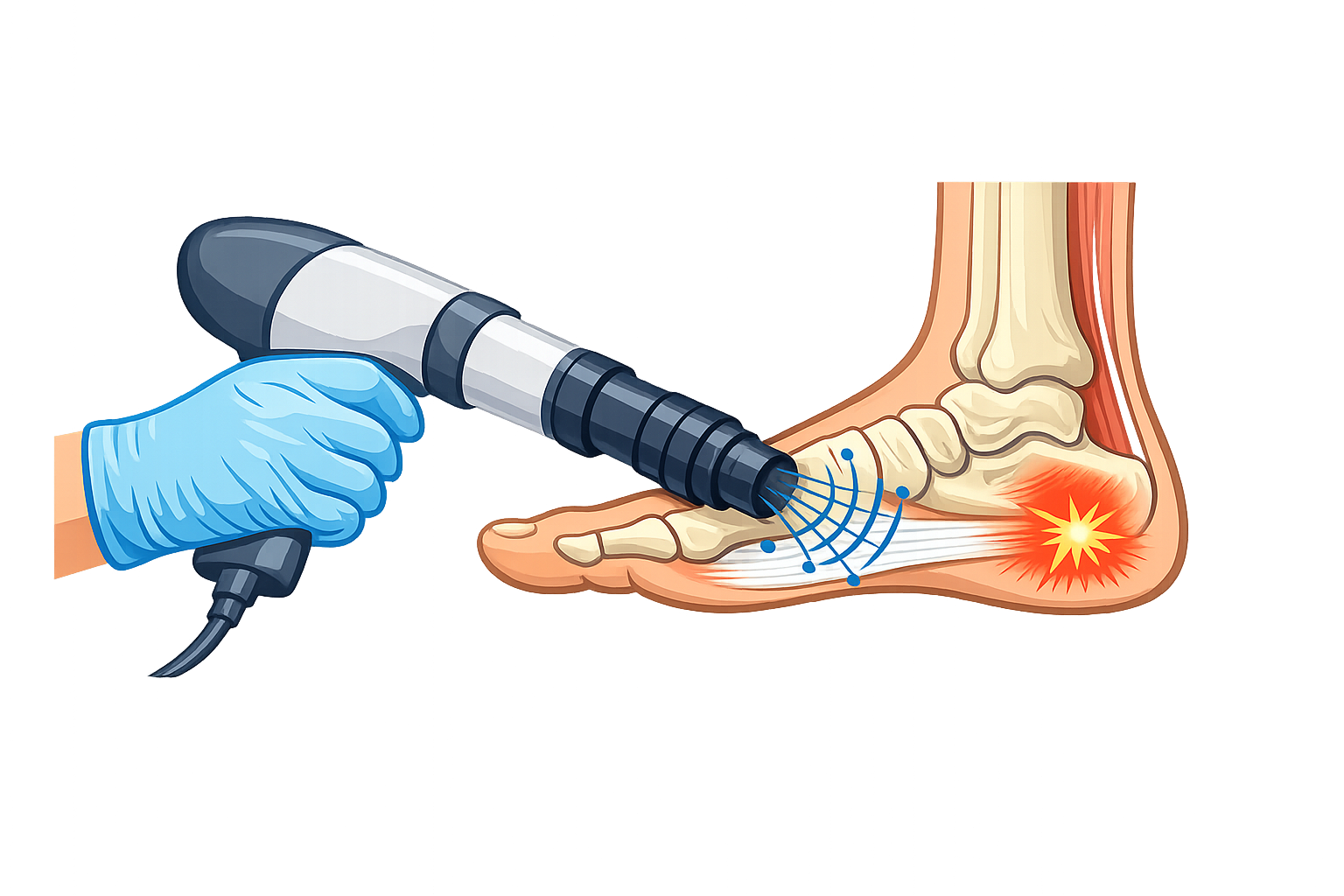
    Shockwave therapy — formally known as Extracorporeal Shockwave Therapy (ESWT) — is a non-invasive treatment that uses controlled acoustic sound waves to stimulate healing in injured or chronically inflamed tissue.

    Unlike electrical stimulation or ultrasound therapy, shockwave therapy delivers high-energy pulses directly to the affected area. These pulses:

    • Increase blood circulation
    • Stimulate cellular repair
    • Trigger collagen production
    • Break down scar tissue
    • Activate the body’s natural healing response

    The result is improved tissue regeneration and long-term pain relief.

    Shockwave therapy does not involve surgery, anesthesia, or incisions. Most treatments take 15–20 minutes and are performed in the office.

    How Shockwave Therapy Helps Chronic Foot and Ankle Pain

    Chronic pain often develops when tissues fail to heal properly after repetitive strain, micro-tears, or inflammation. Over time, the body’s natural repair process slows down.

    Shockwave therapy essentially “restarts” healing.

    When acoustic waves penetrate the damaged tissue, they create controlled micro-trauma. This may sound counterintuitive — but it stimulates:

    • New blood vessel formation (neovascularization)
    • Improved oxygen delivery
    • Growth factor release
    • Accelerated tissue remodeling

    This makes shockwave therapy benefits especially valuable for patients who have tried conservative treatments like rest, stretching, orthotics, and anti-inflammatory medication without success.


    Conditions Treated with Shockwave Therapy

    Shockwave therapy is highly effective for several chronic foot and ankle conditions.

    Plantar Fasciitis

    One of the most common uses is plantar fasciitis shockwave therapy.

    Plantar fasciitis occurs when the thick band of tissue along the bottom of the foot becomes inflamed or degenerative. Patients often experience:

    • Sharp heel pain first thing in the morning
    • Pain after long periods of standing
    • Tightness along the arch
    • Worsening discomfort with activity

    For chronic plantar fasciitis lasting more than 6 months, shockwave therapy has shown high success rates — especially when combined with stretching and supportive footwear.

    Achilles Tendonitis

    Chronic Achilles pain often develops in runners, athletes, or individuals with tight calf muscles. Shockwave therapy improves tendon healing by stimulating collagen production and reducing chronic inflammation.

    Heel Spurs

    Although heel spurs themselves are not always painful, inflammation in the surrounding tissue can cause persistent discomfort. Shockwave therapy helps address the underlying inflammation rather than just masking symptoms.

    Posterior Tibial Tendon Dysfunction (PTTD)

    This condition affects the inside of the ankle and can lead to progressive flatfoot deformity. Early intervention with non-surgical foot treatments like shockwave therapy may prevent worsening symptoms.

    Chronic Ankle Tendinopathies

    Athletes and active individuals frequently develop overuse injuries in the ankle. Shockwave therapy can accelerate recovery and reduce downtime.

    nationwide foot and ankle doctors Michigan

    Why Many Patients Prefer Shockwave Therapy Over Surgery

    Surgery may be necessary in certain severe cases. However, many patients prefer to explore conservative options first.

    Here’s why shockwave therapy is often recommended before surgical intervention:

    1. No Incisions or Sutures

    There are no cuts, stitches, or surgical wounds.

    2. Minimal Downtime

    Most patients return to normal activity within 24–48 hours.

    3. No General Anesthesia

    The procedure is performed in-office.

    4. Lower Risk of Complications

    No surgical infection risk.

    5. Long-Term Healing, Not Temporary Relief

    Shockwave therapy addresses tissue degeneration rather than simply reducing inflammation temporarily.

    For many individuals seeking non-surgical foot treatments, this approach provides a balance between effectiveness and safety.


    What to Expect During Treatment

    Patients often ask whether the treatment is painful.

    Here’s what typically happens:

    1. The podiatrist identifies the precise pain location.
    2. A handheld device delivers targeted acoustic waves.
    3. Treatment lasts 15–20 minutes.
    4. Mild discomfort may occur during the session.
    5. Temporary soreness may follow for 1–2 days.

    Most treatment plans involve 3–5 sessions spaced one week apart.

    Improvement is often gradual, with maximum results appearing over several weeks as tissue regeneration continues.

    Who Is a Good Candidate?

    Shockwave therapy is ideal for:

    • Patients with chronic pain lasting 3–6+ months
    • Individuals who have failed conservative treatment
    • Athletes seeking faster recovery
    • Patients wishing to avoid surgery
    • Individuals who cannot tolerate steroid injections

    It may not be appropriate for patients with:

    • Certain circulatory disorders
    • Active infections
    • Pregnancy
    • Severe nerve disorders

    A thorough evaluation at Nationwide Foot & Ankle Care, P.C. determines candidacy.

    Clinical research shows strong success rates for chronic plantar fasciitis and tendon disorders.

    Many studies report:

    • 70–85% reduction in pain
    • Significant functional improvement
    • Long-lasting results
    • Reduced need for surgery

    Because it stimulates healing rather than suppressing inflammation alone, results often continue improving after treatment is completed.

    Recovery and Aftercare

    After treatment:

    • Avoid high-impact activity for 48 hours
    • Continue recommended stretching
    • Wear supportive footwear
    • Follow podiatrist guidance

    Because healing is biological, improvement continues gradually.


    Is shockwave therapy covered by insurance?

    Coverage varies depending on diagnosis and plan. Our office can verify benefits.

    How soon will I feel relief?

    Some patients notice improvement within weeks; others experience gradual improvement over 2–3 months.

    Is it safe?

    When performed by trained professionals, shockwave therapy is considered safe and well-tolerated.


    If you are experiencing:

    • Heel pain lasting more than a few months
    • Pain interfering with exercise or work
    • Recurrent ankle inflammation
    • Failed conservative treatments

    It may be time to consider advanced options.

    At Nationwide Foot & Ankle Care, P.C., our podiatrists evaluate the root cause of your pain and develop a personalized treatment plan — which may include shockwave therapy or other evidence-based solutions.


    Chronic foot and ankle pain does not have to define your daily life. Modern treatments like shockwave therapy for foot pain are helping patients heal faster, avoid surgery, and return to the activities they love.

    If you’re exploring plantar fasciitis shockwave therapy or other non-surgical foot treatments, schedule a consultation to determine whether this advanced therapy is right for you.

    Your feet carry you every day — they deserve expert care.

  • Understanding Morton’s Neuroma: Symptoms, Causes, and Treatment Options

    livonia, mi foot pain

    Effective Treatment for Morton’s Neuroma at Nationwide Foot & Ankle Care, P.C.

    Morton’s neuroma is a painful condition that affects the ball of your foot, often between the third and fourth toes. It occurs when the tissue around one of the nerves leading to the toes thickens, causing pain, discomfort, and other symptoms. Although the condition is common, many people are unaware of what it is, how it develops, and how it can be treated. At Nationwide Foot & Ankle Care, P.C., our expert podiatrists specialize in diagnosing and treating Morton’s neuroma with effective, non-surgical solutions to help alleviate pain and improve your foot health.

    In this article, we’ll explore the symptoms, causes, and treatment options available for Morton’s neuroma to help you better understand this condition and find relief.

    What is Morton’s Neuroma?

    Morton’s neuroma is a condition that affects the nerves in the foot, leading to inflammation and the thickening of the tissue surrounding the affected nerve. The condition most commonly occurs between the third and fourth toes, but it can also develop between other toes. The thickened tissue can compress the nerve, causing pain, tingling, burning, and a sensation of something being stuck under the foot.

    While Morton’s neuroma is not a tumor or cancerous, it can cause significant discomfort and interfere with daily activities. If left untreated, the symptoms may worsen and lead to chronic pain.

    Symptoms of Morton’s Neuroma

    The symptoms of Morton’s neuroma can vary in intensity, but common signs include:

    • Pain in the Ball of the Foot: The most common symptom is pain in the ball of the foot, particularly between the third and fourth toes. The pain may be sharp, burning, or aching.
    • Tingling or Numbness: Some individuals with Morton’s neuroma experience tingling, numbness, or a “pins and needles” sensation in the toes.
    • Sensation of Something Stuck: You may feel like there’s a pebble or small object stuck in your shoe under the affected area, especially when walking.
    • Pain that Worsens with Activity: The pain may intensify when walking, running, or standing for long periods of time, especially if you’re wearing tight or ill-fitting shoes.
    • Relief with Rest: The pain often subsides when you rest or remove pressure from the affected foot, but it can return when you resume activities.

    If you’re experiencing any of these symptoms, it’s important to seek professional care from a podiatrist to determine if Morton’s neuroma is the cause.

    Morton's Neuroma Michigan

    Causes of Morton’s Neuroma


    The exact cause of Morton’s neuroma is not always clear, but several factors can increase the likelihood of developing this condition:

    Gender: Women are more likely to develop Morton’s neuroma due to the frequent use of high-heeled shoes, which place extra pressure on the toes and forefoot.

    Tight or Ill-Fitting Shoes: Shoes with a narrow toe box, high heels, or insufficient arch support can put pressure on the nerves in the foot, leading to the development of Morton’s neuroma.

    Foot Abnormalities: Certain foot structures, such as flat feet, high arches, or bunions, can cause abnormal pressure on the foot, contributing to the development of Morton’s neuroma.

    Repetitive Stress or Injury: Activities that involve repetitive stress on the foot, such as running or high-impact sports, can increase the risk of developing Morton’s neuroma. This is especially true if the foot is exposed to uneven surfaces or excessive pressure during activity.

    Foot Deformities: Conditions like hammertoes and bunion deformities can cause misalignment in the toes, increasing the likelihood of nerve compression and the development of Morton’s neuroma.

    Podiatrist morton's neuroma

    Treatment Options for Morton’s Neuroma


    While Morton’s neuroma can be a painful condition, several treatment options can provide relief. The appropriate treatment will depend on the severity of your symptoms and the underlying cause of your condition. At Nationwide Foot & Ankle Care, P.C., our podiatrists offer both conservative and surgical options for treating Morton’s neuroma.

    1. Conservative Treatments

    In the early stages of Morton’s neuroma, non-surgical treatments are often effective at relieving pain and preventing the condition from worsening. Common conservative treatments include:

    • Proper Footwear: Switching to shoes with a wider toe box, lower heels, and better arch support can help reduce pressure on the affected area and alleviate pain. Orthotic insoles may also be recommended to provide additional support.
    • Rest and Activity Modification: Resting the foot and avoiding activities that exacerbate the pain, such as running or prolonged standing, can give the nerve time to heal.
    • Ice Therapy: Applying ice to the affected area for 15-20 minutes several times a day can help reduce inflammation and relieve pain.
    • Corticosteroid Injections: For more severe pain, corticosteroid injections may be administered to reduce inflammation and provide temporary pain relief.
    • Physical Therapy: Stretching and strengthening exercises may be recommended to address any foot imbalances, improve mobility, and relieve pressure on the affected nerve.

    2. PRP (Platelet-Rich Plasma) Therapy

    Platelet-rich plasma (PRP) therapy is an advanced treatment option that involves injecting a concentrated solution of platelets from your own blood into the affected area. The growth factors in the PRP help stimulate tissue regeneration and accelerate healing, offering pain relief for those with Morton’s neuroma.

    • Benefits: PRP therapy can help reduce inflammation, promote healing of the nerve tissue, and alleviate pain.

    3. Surgery

    If conservative treatments fail to provide relief, surgery may be necessary to remove the thickened tissue around the nerve. Surgical options include:

    • Neurectomy: This procedure involves removing the affected nerve and any surrounding tissue. While it is typically effective in providing long-term relief, surgery is usually considered a last resort.
    • Decompression Surgery: In some cases, the podiatrist may perform a decompression procedure to relieve pressure on the nerve without removing it.

    Surgical intervention is typically reserved for patients with chronic symptoms that do not respond to conservative treatments.

    When to See a Podiatrist for Morton’s Neuroma

    If you’re experiencing persistent pain, discomfort, or other symptoms associated with Morton’s neuroma, it’s important to seek professional care. Early diagnosis and treatment can help prevent the condition from worsening and improve your long-term foot health.

    You should schedule an appointment with a podiatrist if:

    You experience numbness, tingling, or persistent discomfort in the toes.

    The pain is severe and interferes with your daily activities.

    The symptoms don’t improve with rest, changes in footwear, or other home treatments.


    Why Choose Nationwide Foot & Ankle Care, P.C. for Morton’s Neuroma Treatment?

    At Nationwide Foot & Ankle Care, P.C., our podiatrists are dedicated to providing expert care for Morton’s neuroma and other foot conditions. We offer a range of treatment options tailored to your needs, from conservative therapies to surgical solutions. Our goal is to help you find lasting relief and return to pain-free living.

    Why Choose Us?

    • Expert Podiatrists: Our podiatrists specialize in diagnosing and treating Morton’s neuroma with the latest techniques and therapies.
    • Comprehensive Foot and Ankle Care: We provide a wide range of services, from non-invasive treatments like orthotics to advanced procedures like PRP therapy and surgery.
    • Personalized Care: Each treatment plan is customized to meet your individual needs, ensuring the best possible outcome.
    • State-of-the-Art Technology: We use the latest diagnostic tools and treatment options to provide the most effective care.

    Contact Us for Morton’s Neuroma Treatment

    If you’re suffering from Morton’s neuroma, don’t wait to seek treatment. Nationwide Foot & Ankle Care, P.C. offers effective solutions to help you manage pain and promote healing. Schedule an appointment today with one of our experienced podiatrists to discuss treatment options.

    Call us at (734) 261-3400

    Request an appointment online: Request Appointment


  • Foot Pain and Poor Posture: How They’re Connected and What to Do

    livonia, mi foot pain


    Understanding the Link Between Foot Pain and Posture

    Foot pain is a common issue that affects many people at some point in their lives. While most people associate foot pain with obvious causes such as injury, excessive activity, or wearing uncomfortable shoes, the connection between foot pain and poor posture is often overlooked. Poor posture can significantly affect how we walk, stand, and carry our bodies, putting excess strain on our feet, leading to pain, discomfort, and long-term damage.

    At Nationwide Foot & Ankle Care, P.C., we help patients understand the relationship between foot pain and posture and provide effective treatments to correct these issues. In this article, we’ll explore how poor posture can lead to foot pain, the symptoms to look out for, and how podiatrists can help.

    How Posture Affects Foot Health

    Posture refers to the way you position your body when sitting, standing, or moving. Proper posture involves aligning your spine, hips, knees, and feet in a way that maintains balance and reduces strain on your joints and muscles. However, poor posture – such as slouching, leaning forward, or uneven weight distribution – can throw off your body’s alignment and lead to various musculoskeletal problems, including foot pain.

    Here are some ways poor posture can negatively impact your feet:

    Overuse Injuries: When your posture misaligns your body, the extra stress on your feet can lead to overuse injuries like plantar fasciitis, Achilles tendonitis, and shin splints. These conditions are common in people with poor posture because they involve repetitive strain on the feet and lower limbs.

    Uneven Weight Distribution: When your posture is poor, such as having a hunched back or forward-leaning posture, the body compensates by distributing weight unevenly across the feet. This can cause certain areas of the foot, such as the heels, arches, and forefoot, to bear more pressure than they should, leading to pain and discomfort.

    Altered Gait: Poor posture can also change the way you walk. For example, if your pelvis is tilted due to bad posture, it can cause your feet to pronate (roll inward) or supinate (roll outward) excessively, resulting in strain on the muscles and ligaments in the feet.

    Foot Health Livonia MI

    Common Foot Conditions Caused by Poor Posture

    Several foot conditions can be triggered or exacerbated by poor posture. These include:


    Plantar Fasciitis

    Plantar fasciitis is one of the most common causes of heel pain, and it often results from prolonged stress and strain on the plantar fascia ligament. Poor posture can alter the way you distribute your weight when walking, leading to excessive tension on the ligament, which can cause inflammation and pain in the heel.

    Flat Feet

    Flat feet, or fallen arches, occur when the arch of the foot collapses, causing the foot to make full contact with the ground. Poor posture, such as leaning too far forward or backward, can contribute to the development of flat feet by altering your body’s alignment and placing added stress on the arches.

    Bunions

    Bunions are painful, bony protrusions that develop at the base of the big toe, often due to abnormal foot mechanics. Postural imbalances can exacerbate the development of bunions by causing misalignment in the feet and increasing pressure on the toes.

    Achilles Tendonitis

    Achilles tendonitis is an overuse injury caused by inflammation of the Achilles tendon, the band of tissue connecting the calf muscle to the heel. Poor posture can contribute to improper foot mechanics and place excessive stress on the Achilles tendon, leading to pain and swelling.

    Hammer Toes

    Hammer toes occur when the middle joint of a toe becomes bent, causing it to curl downward. This condition can be caused or worsened by poor posture that forces the toes into an unnatural position, leading to friction, pain, and deformity.

    How Podiatrists Can Help Correct Foot Pain Caused by Poor Posture


    If poor posture is contributing to your foot pain, a podiatrist can help assess your posture and foot mechanics, diagnose underlying issues, and create a treatment plan to relieve pain and restore proper function. Some treatment options include:


    1. Foot and Ankle Assessments

    A podiatrist will begin by performing a comprehensive foot and ankle assessment to evaluate your posture, gait, and alignment. This may involve observing the way you walk, checking for signs of misalignment or abnormal foot mechanics, and conducting tests to assess your range of motion and strength.

    2. Custom Orthotics

    One of the most effective treatments for correcting foot pain caused by poor posture is the use of custom orthotics. These are specially designed shoe inserts that provide support and cushioning, helping to correct misalignment in the feet and improve posture. Orthotics can help redistribute weight evenly across the feet, reducing stress on specific areas and promoting better posture.

    3. Posture Correction and Physical Therapy

    Podiatrists often work with physical therapists to provide a holistic approach to correcting poor posture. Physical therapy exercises can help strengthen the muscles that support proper posture, improve flexibility, and teach you how to move and sit in a way that promotes better body alignment. Over time, this can help alleviate foot pain caused by poor posture.

    4. Stretching and Strengthening Exercises

    Certain stretching and strengthening exercises can help address postural imbalances and reduce foot pain. For example, exercises to strengthen the muscles of the lower legs and feet, such as toe raises, calf stretches, and balance exercises, can improve posture and relieve pain caused by muscle imbalances.

    5. Footwear Recommendations

    Proper footwear plays a crucial role in maintaining good posture and foot health. A podiatrist can recommend shoes that provide the right support for your unique foot structure and promote better alignment. They may also suggest footwear modifications or orthotic inserts to help you maintain proper posture and reduce foot pain.


    Why Choose Nationwide Foot & Ankle Care, P.C.

    At Nationwide Foot & Ankle Care, P.C., we specialize in diagnosing and treating foot pain caused by poor posture. Our expert podiatrists work with you to create a personalized treatment plan that addresses the underlying causes of your foot pain, whether it’s due to poor posture, injury, or other conditions. We use the latest techniques and technology to provide effective, non-invasive treatments that promote healing, restore function, and alleviate pain.

    Contact Us for Foot Pain Relief

    If you’re struggling with foot pain related to poor posture, don’t wait to seek help. Our team of experienced podiatrists is here to help you regain comfort and mobility. Schedule an appointment with us today and take the first step toward pain-free feet.

    Call us at (734) 261-3400

    Request an appointment online: Request Appointment


  • What is Shockwave Therapy and How Can It Treat Foot Pain?


    An Innovative Treatment for Chronic Foot Pain

    Chronic foot pain can be debilitating, making everyday activities like walking, running, or even standing difficult. Conditions such as plantar fasciitis, Achilles tendonitis, and heel spurs can cause persistent discomfort, and traditional treatments like rest, ice, and over-the-counter medications may not always provide lasting relief. Fortunately, shockwave therapy has emerged as a highly effective, non-invasive solution for treating foot pain and promoting healing.

    At Nationwide Foot & Ankle Care, P.C., we offer shockwave therapy to help our patients alleviate chronic foot pain and restore their quality of life. In this article, we’ll explore what shockwave therapy is, how it works, and how it can be used to treat common foot conditions like plantar fasciitis.


    What is Shockwave Therapy?

    Shockwave therapy, also known as extracorporeal shock wave therapy (ESWT), is a non-invasive treatment that uses high-energy sound waves to stimulate healing in damaged tissues. The therapy works by delivering acoustic waves to the affected area, which helps to promote circulation, reduce inflammation, and accelerate the body’s natural healing processes. This treatment is particularly effective for musculoskeletal conditions that involve soft tissue, such as tendonitis, fasciitis, and chronic pain in areas like the foot and ankle.

    Shockwave therapy has been used for decades in sports medicine and orthopedics to treat conditions in the joints, muscles, and tendons. Recently, its application has expanded to include the treatment of chronic foot pain, where it has shown to be highly effective.

    Foot Health Livonia MI


    How Does Shockwave Therapy Work?

    Shockwave therapy works by transmitting high-energy sound waves to the targeted area of pain. These waves penetrate the skin and reach the damaged tissue, stimulating the body’s natural healing mechanisms.


    Shockwave Therapy Treatments

    • Improved blood flow: The acoustic waves stimulate blood circulation in the affected area, which promotes faster healing.
    • Collagen production: Shockwave therapy encourages the production of collagen, a protein that is essential for tissue repair and regeneration.
    • Reduced inflammation: The therapy helps to reduce swelling and inflammation, which are common in conditions like plantar fasciitis and Achilles tendonitis.
    • Pain relief: By stimulating the tissue and accelerating the healing process, shockwave therapy can provide significant pain relief for patients suffering from chronic conditions.


    Benefits of Shockwave Therapy for Foot Pain

    Shockwave therapy is a promising treatment option for individuals dealing with persistent foot pain. Here are the key benefits of shockwave therapy


    Shockwave Therapy Benefits

    • Non-invasive: Unlike surgery, shockwave therapy requires no incisions or anesthesia, making it a safe and minimally invasive option for treating foot pain.
    • Quick recovery: Since shockwave therapy is non-surgical, recovery times are typically quick, and patients can resume normal activities shortly after treatment.
    • Minimal side effects: Most patients experience only mild discomfort during the procedure, and side effects are rare.
    • Effective for chronic conditions: Shockwave therapy is particularly effective for chronic conditions that haven’t responded to traditional treatments like rest, medication, or physical therapy.
    • No downtime: Most patients can return to their daily activities immediately after the treatment.


    Conditions Treated with Shockwave Therapy

    Shockwave therapy is particularly effective for treating chronic foot and ankle conditions that involve soft tissue damage. Here are some of the most common conditions treated with shockwave therapy


    Plantar Fasciitis

    Plantar fasciitis is one of the most common causes of heel pain. It occurs when the plantar fascia, a thick band of tissue that runs along the bottom of the foot, becomes inflamed due to overuse or strain. Shockwave therapy helps to break down scar tissue, stimulate healing, and reduce inflammation in the plantar fascia, providing relief from the pain.


    Shockwave therapy for Plantar Fasciitis

    • Symptoms: Sharp, stabbing pain in the bottom of the heel, especially in the morning or after periods of rest.
    • Shockwave Therapy Benefits: Reduces inflammation, promotes tissue healing, and accelerates recovery.


    Achilles Tendonitis

    Achilles tendonitis is an overuse injury that causes inflammation of the Achilles tendon, located at the back of the ankle. This condition can result in pain, swelling, and difficulty walking. Shockwave therapy can help alleviate pain, stimulate collagen production, and promote healing in the Achilles tendon.


    Tips for Managing Achiles Tendonis

    • Symptoms: Pain, swelling, and stiffness in the back of the ankle, especially during or after physical activity.
    • Shockwave Therapy Benefits: Reduces pain and inflammation, accelerates healing, and improves tendon strength.


    Heel Spurs

    Heel spurs are bony growths that form on the heel bone, often as a result of long-term stress or inflammation in the plantar fascia. Shockwave therapy can help reduce the pain associated with heel spurs by promoting healing and reducing inflammation.


    Shockwave Therapy for Heel Spurs

    • Symptoms: Sharp pain in the heel, especially when walking or standing for long periods.
    • Shockwave Therapy Benefits: Reduces inflammation around the heel spur and promotes healing of surrounding tissue.


    Tendonitis (Peroneal, Tibial, and Flexor Tendonitis)

    Tendonitis in the foot and ankle can result from overuse or trauma to the tendons, causing pain and swelling. Shockwave therapy is effective for treating tendonitis in various tendons, including the peroneal tendon, tibial tendon, and flexor tendon, by reducing inflammation and promoting tissue regeneration.


    Shockwave Therapy for Tendonitis

    • Symptoms: Pain, swelling, and weakness in the affected tendon.
    • Shockwave Therapy Benefits: Reduces inflammation, accelerates healing, and improves tendon function.


    Morton’s Neuroma

    Morton’s neuroma is a benign growth of nerve tissue that causes pain and discomfort in the ball of the foot. Shockwave therapy can help reduce the pain and inflammation associated with Morton’s neuroma, providing relief for patients who have not responded to other treatments.


    Shockwave Therapy for Morton’s Neuroma

    • Symptoms: Sharp, burning pain in the ball of the foot, often between the toes.
    • Shockwave Therapy Benefits: Reduces nerve inflammation and promotes healing.


    What to Expect During a Shockwave Therapy Session

    Shockwave therapy is typically performed in-office and does not require anesthesia. Here’s what to expect during a typical session:


    Consultation and Evaluation

    Before your treatment, your podiatrist will evaluate your foot condition, conduct a physical exam, and may take diagnostic images (X-rays or MRI) to determine the exact location of the injury.


    Shockwave Therapy Procedure

    During the treatment, a gel is applied to the affected area of the foot or ankle. The shockwave device is then used to deliver high-energy sound waves to the target area. The treatment typically lasts 10 to 15 minutes, and you may feel some discomfort during the procedure, but it’s generally well tolerated.


    Aftercare

    There is no downtime required after shockwave therapy, and most patients can return to their regular activities immediately. Mild soreness may occur after the treatment, but this typically subsides within a few days. Your podiatrist may recommend follow-up treatments or physical therapy to enhance healing.

    Stretch and Strengthen Your Feet and Legs

    Incorporating foot stretches and strengthening exercises into your daily routine can help alleviate tension, improve circulation, and reduce the risk of foot problems. Simple stretches like toe curls, calf stretches, and ankle circles can help keep your feet flexible and strong.

    Don’t Ignore Foot Pain

    If you’re experiencing persistent or severe foot pain during pregnancy, consult with a podiatrist. Ignoring foot problems can lead to long-term discomfort or complications, so it’s important to seek professional advice and treatment when needed.

    Why Choose Nationwide Foot ad Ankle Care

    • Experienced Podiatrists: Our podiatrists are highly skilled in administering shockwave therapy for effective pain relief and tissue healing.
    • Comprehensive Care: We offer a wide range of treatments for foot and ankle conditions, from conservative therapies to advanced surgical options.
    • State-of-the-Art Technology: We use the latest shockwave therapy equipment to ensure optimal treatment outcomes.
    • Personalized Treatment Plans: We provide individualized treatment plans tailored to your specific condition and needs.

    A podiatrist can assess your foot health and provide treatment options to relieve pain and prevent further complications. At Nationwide Foot & Ankle Care, P.C., our team is dedicated to helping expectant mothers maintain foot health and comfort throughout pregnancy.


    Contact Us for Shockwave Therapy Treatment

    If you’re suffering from chronic foot pain and are interested in learning more about shockwave therapy, Nationwide Foot & Ankle Care, P.C. is here to help. Contact us today to schedule a consultation and discover how shockwave therapy can help alleviate your pain and promote healing.

    Call us at (734) 261-3400

    Request an appointment online: Request Appointment